
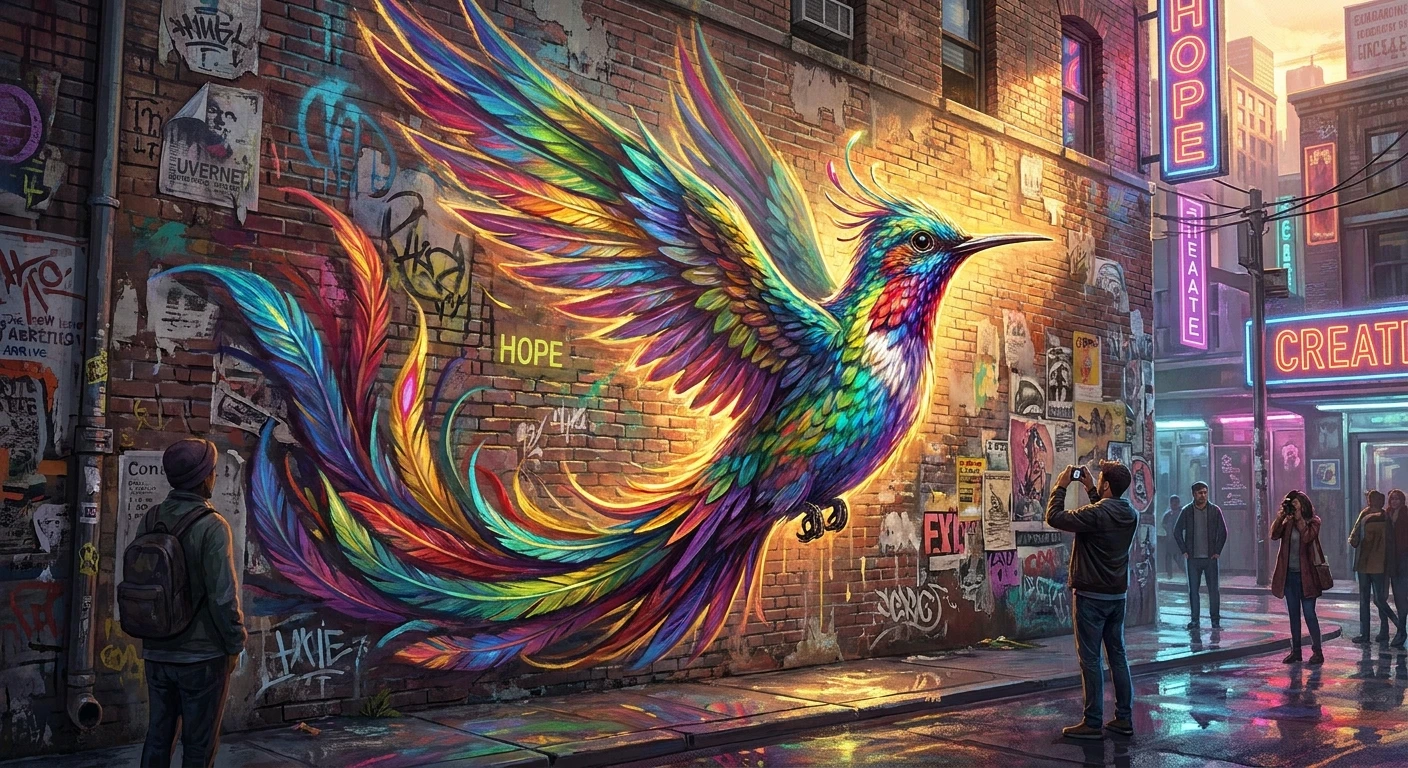
The Ultimate Guide to Pam the Bird Graffiti
Have you ever turned a corner in a bustling city and found yourself immediately captivated by the striking visual of the Pam the Bird Graffiti? You are definitely not alone. This iconic piece of urban culture captures attention through its vivid colors, unique character design, and placement in unexpected architectural spaces. The avian character serves as a fascinating anchor point for anyone interested in the broader street art movement. When you look closely at these murals, you see more than just aerosol on brick; you witness a raw, unfiltered dialogue between the artist and the environment. Street art has evolved far beyond its underground origins, becoming a recognized form of public expression that redefines how we experience our cities. The bird motif specifically resonates because it brings a touch of organic nature back to rigid concrete landscapes. Exploring this phenomenon provides deep insight into modern visual culture, public space utilization, and the democratization of art. Whether you are an avid mural hunter or simply a curious passerby, understanding the context behind these colorful avian characters completely changes the way you navigate the streets. Grab your camera and a sturdy pair of shoes, because we are going to explore every facet of this remarkable urban phenomenon.
Understanding the Impact and Cultural Value
To fully grasp why specific character murals capture the public imagination, we need to look at the tangible effects they have on their surroundings. Urban art provides a distinct value proposition: it revitalizes neglected areas, sparks community conversations, and creates informal landmarks that help people navigate their neighborhoods. A well-executed piece turns a blank, ignored wall into a destination. People travel specifically to photograph and interact with these environments. When a familiar character pops up in different locations, it creates a sense of continuity and scavenger-hunt excitement for locals. Think about how a mural in a commercial district might draw foot traffic to nearby independent cafes, while a massive piece in a derelict industrial zone reclaims forgotten architecture for creative use. To maximize your appreciation of these works, you need a strategy.
- First, analyze the geographical context: ask yourself why the artist chose this specific wall and how the character interacts with physical obstacles like pipes or windows.
- Second, observe the medium and technique to see if it relies on precise stencils, freehand aerosol, or wheatpaste additions.
- Third, look for contextual clues or subtle variations in the design that might communicate a specific local message.
Below is a breakdown of how different urban environments influence the presentation and reception of character-based street art.
Read also: Discovering the Legacy of Charlotte O'Brien; Understanding a Melbourne Car Chase: Facts and Tactics.
| Urban Environment | Visual Execution Style | Typical Public Reception |
|---|---|---|
| Commercial and Retail Districts | High-contrast, polished, often featuring bright neon accents to compete with advertisements. | Highly celebrated, frequently photographed, and sometimes officially protected by property owners. |
| Industrial Zones and Abandoned Lots | Larger scale, experimental, often incorporating the natural decay of the building into the artwork. | Appreciated by dedicated art hunters and urban explorers, though subject to rapid natural weathering. |
| Residential Alleyways and Side Streets | Smaller, intimate stencil work or quick freehand throws designed for close-up viewing. | Viewed as an organic part of the neighborhood fabric, often sparking localized community discussions. |
Origins in Underground Street Culture
The roots of character-driven graffiti trace back to the bustling transit networks and concrete walls of the late twentieth century. Early graffiti primarily focused on typography and localized tags, but as the medium matured, artists began seeking ways to communicate more universally. Characters offered a visual shorthand that transcended language barriers. The avian motif emerged as a powerful symbol of freedom, mobility, and the ability to view the chaotic city from a detached, elevated perspective. Early iterations were often simple outlines executed quickly under the cover of darkness. As the tools improved and artists gained more confidence, these simple sketches evolved into complex, multi-layered icons that carried distinct personalities and recurring themes.
Evolution of the Avian Motif
As street culture intersected with graphic design, the stylistic execution of urban birds shifted dramatically. The transition from crude spray-paint sketches to highly detailed, stylized characters marked a turning point in public art. Artists began utilizing sophisticated stencil techniques, allowing for sharp edges and repeatable patterns that could be deployed rapidly across multiple neighborhoods. The color palettes expanded from standard hardware-store black and silver to custom-mixed, specialized graffiti aerosols offering hundreds of distinct shades. This technical evolution allowed the bird character to adopt different personas—sometimes appearing whimsical and cartoonish, other times aggressive and angular, depending entirely on the architectural context and the specific message the artist intended to convey at that moment.
Modern State and Global Recognition
Today, character graffiti occupies a unique space between illegal vandalism and highly coveted contemporary art. The line has blurred significantly. Characters that once lived strictly in the shadows now frequently appear in curated gallery shows, premium brand collaborations, and officially sanctioned urban beautification projects. The internet played a massive role in this transition. Social media platforms allow ephemeral street pieces to achieve permanent global visibility instantly. A piece painted in an obscure alley can be viewed by millions worldwide within hours. This global network of documentation ensures that even when a physical mural is buffed away or destroyed by demolition, its cultural footprint remains intact, inspiring the next generation of urban creators.
Aerosol Chemistry and Adhesion
The creation of lasting street art relies heavily on material science. The paint utilized by serious urban artists is vastly different from standard decorative aerosols. Modern graffiti sprays are formulated with high-quality alkyd resins and synthetic polymers that ensure rapid drying times and aggressive adhesion to porous surfaces like brick, concrete, and unprimed wood. The propellants and solvent blends are carefully balanced to maintain consistent pressure, allowing artists to control the flow rate with extreme precision depending on the type of actuator nozzle—commonly called a cap—they attach to the can. This fluid dynamics puzzle requires the artist to intuitively understand how viscosity and pressure change with ambient temperature and humidity.
Pigment Durability in Urban Environments
Surviving the harsh realities of the street is a constant battle against chemistry and physics. Artwork exposed to direct sunlight faces severe ultraviolet radiation, which breaks down chemical bonds in the paint and causes rapid color fading. To combat this, premium paint manufacturers load their formulas with high-grade, UV-resistant pigments—such as titanium dioxide for brilliant whites and complex organic compounds for vibrant reds and blues.
- High-grade aerosol paints feature modified vapor pressure dynamics for smooth application in sub-zero temperatures.
- Capillary action pulls specialized low-viscosity paints deep into the microscopic pores of concrete, preventing easy removal.
- Clear-coat sealants utilizing polyurethane binders are often applied to commissioned pieces to create a sacrificial layer against weather and chemical graffiti removers.
- Alkaline masonry environments can degrade standard pigments, requiring specialized acrylic-based formulations for maximum longevity.
Day 1: Research Local Street Art Districts
Start your journey by mapping out the artistic hubs in your chosen city. Spend the day browsing digital archives, local art blogs, and social media geotags to identify which neighborhoods currently host the highest concentration of murals. Cross-reference these digital finds with current street views to ensure the walls still exist, as the urban landscape changes rapidly.
Day 2: Equip Yourself for the Urban Hike
Street art hunting requires the right gear. Pack a comfortable backpack with water, a portable phone charger, and wear supportive footwear suitable for navigating uneven pavement and industrial debris. Bring a dedicated camera with a wide-angle lens to capture massive walls in tight alleyways, and consider a polarizing filter to eliminate the harsh glare that often reflects off freshly painted, glossy surfaces.
Day 3: Map Out Known Graffiti Hotspots
Create a logical, looping route that covers the primary locations you identified during your research. Group your targets by neighborhood to minimize transit time. Mark potential coffee shops and rest stops along the way. Having a structured physical map prevents you from wandering aimlessly and ensures you hit all the major historical pieces before sunset.
Day 4: Morning Light Photography
Dedicate this day strictly to capturing the art in the best possible conditions. Wake up before dawn and hit the streets during the golden hour. The soft, directional morning light brings out the intricate textures of the brickwork and the subtle color gradients of the aerosol paint. Furthermore, early mornings mean fewer parked cars and pedestrians blocking your perfect wide-angle shots.
Day 5: Exploring Industrial Edges
Move away from the polished commercial districts and head toward the gritty, industrial outskirts. These transition zones between active factories and abandoned lots are where artists often go to experiment with massive, time-consuming pieces without the constant threat of interruption. Always prioritize your personal safety, obey trespassing laws, and remain highly aware of your surroundings in these isolated areas.
Day 6: Connecting with Local Artists and Galleries
Art does not exist in a vacuum; it thrives on community. Spend this day visiting independent galleries, zine shops, and local creative hubs. Speak directly with gallery owners and curators who specialize in urban contemporary art. They possess invaluable insider knowledge about recent unannounced murals, the history of specific characters, and the broader cultural context of the neighborhood.
Day 7: Documenting and Archiving Your Finds
Return home and meticulously organize your photographs. Tag your files with specific locations, dates, and artist names if known. Share your best discoveries with online street art communities, contributing to the global archive of ephemeral art. By documenting these pieces, you actively help preserve urban history before the walls are inevitably painted over or demolished by new developments.
Myths and Realities of Urban Aesthetics
Myth: Street art characters like this are always painted illegally by vandals.
Reality: While the culture has illegal roots, a massive percentage of large-scale, high-quality character murals today are fully commissioned by property owners to deter random tagging and beautify their buildings.
Myth: The bird symbol carries a single, rigid political message everywhere it appears.
Reality: Street art is highly decentralized. The meaning of a character adapts organically to its surroundings, interpreted completely differently by various local communities depending on their unique cultural climate.
Myth: Normal weather washes away aerosol art in just a few short months.
Reality: High-quality acrylic-based aerosols bond deeply with masonry. Unless they are actively scrubbed with harsh chemical solvents or painted over, these pieces can remain vibrant and intact for decades.
Myth: Creating massive character art with spray paint is a fast, sloppy process.
Reality: Executing precise proportions and smooth color gradients on a giant scale using only pressurized cans requires years of dedicated practice, intense physical control, and a deep understanding of fluid mechanics.
What does the bird character typically symbolize?
Avian characters in urban environments generally represent freedom, an elevated perspective, and the persistence of nature adapting to man-made, concrete landscapes.
Where can you find this specific art style?
You will typically discover character-driven murals in transitional urban zones, heavily trafficked commercial alleyways, and designated free-wall districts in major metropolitan centers.
Is character-driven graffiti actually legal?
It is only legal when the artist has explicit permission from the property owner. Without permission, even the most beautiful mural is technically considered property damage under the law.
How do artists paint massive pieces so quickly?
Efficiency comes from rigorous preparation, utilizing pre-cut stencils for complex details, and using specialized wide-spray nozzles that cover large surface areas in seconds.
What paint brands are preferred by serious muralists?
Professionals heavily favor specialized European brands like Montana Colors and Belton Molotow, which offer ultra-high pigment loads and highly controllable valve systems.
Can property owners preserve these pieces permanently?
Yes, property owners often apply specialized clear polyurethane sealants over the artwork, which protects the pigments from UV fading and makes it easier to wash away unwanted secondary vandalism.
How is this different from traditional tagging?
Traditional tagging focuses almost entirely on typography, utilizing letters to broadcast a name. Character art relies on illustration and figurative design to communicate a visual mood or broader concept.
Do these murals increase local property values?
In many revitalizing neighborhoods, high-quality, curated street art is seen as a cultural asset that increases foot traffic, thereby indirectly boosting local commercial property values.
The world of urban expression is vast, dynamic, and constantly evolving right before our eyes. The Pam the Bird Graffiti perfectly encapsulates how a simple visual motif can grow into a complex, globally recognized phenomenon that challenges our perceptions of public space. Understanding the chemistry, history, and community behind these colorful walls transforms a simple walk down the street into a rich cultural experience. Next time you head out, look up from your phone, check the alleyways, and see what incredible artwork your city has waiting for you to discover.