
Building Your Dream Cherry Tree Garden
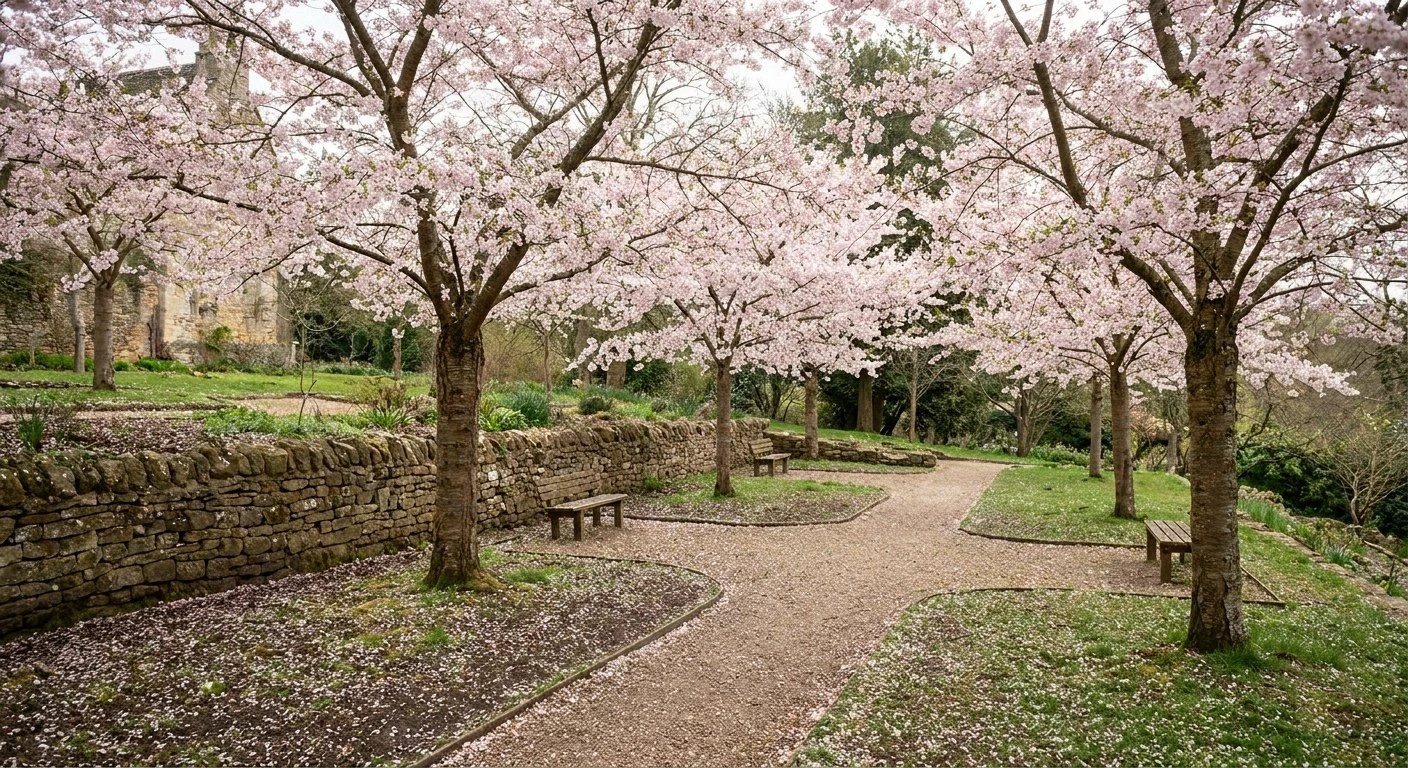
Let’s be honest, stepping out of your back door into a fully blooming cherry tree garden is the absolute ultimate spring vibe. The intoxicating smell of the blossoms, the hum of the bees, and the promise of sweet summer fruit—it’s unbeatable. Growing up, I spent endless summers at my grandparents’ dacha just outside of Kyiv. They had this incredible patch of land dedicated entirely to sour cherries. We would spend hours picking them, our hands stained red, knowing those buckets of fruit were destined for the most incredible homemade varenyky (dumplings) and thick, syrupy jams that would keep us warm through the long Ukrainian winters. It wasn’t just a plot of land; it was a living, breathing part of our family.
Now that we are solidly in 2026, I am seeing a massive resurgence in people wanting to recreate that kind of magic in their own spaces. We spend so much time glued to screens that getting our hands in the dirt feels like an absolute necessity. Whether you have a sprawling rural backyard or just a decent-sized suburban lawn, establishing a fruit-bearing sanctuary is completely within your reach. I’m going to walk you through exactly how to make this happen, sharing the old-school tricks my grandfather taught me alongside the modern horticultural hacks that guarantee success. Trust me, once you taste a sun-warmed cherry pulled straight off your own branch, you’ll wonder why you didn’t start planting a decade ago.
The Real Value of Cultivating Your Space
So, why bother putting in the sweat equity to grow your own fruit? The benefits of establishing this kind of space go way beyond just having a pretty yard in April. When you plant these trees, you are making a long-term investment in your property and your health. Commercially grown cherries are notoriously heavily sprayed with pesticides. By growing your own, you control exactly what goes into the soil and onto the fruit. Plus, the financial payoff is huge. Have you seen the price of organic fruit lately? A mature tree can yield anywhere from 30 to 50 quarts of fruit in a single season.
Let’s look at the value proposition with a couple of real-world examples. First, think about the hyper-local food sharing economy. I have a friend who routinely swaps her surplus Bing cherries with neighbors for fresh eggs and artisanal sourdough. It builds community. Second, consider property value. Mature, fruit-bearing landscaping is a massive selling point for real estate right now. A well-maintained orchard aesthetic instantly elevates a home’s curb appeal.
| Tree Category | Ideal Climate | Primary Use |
|---|---|---|
| Sweet (e.g., Bing, Stella) | Mild winters, warm dry summers | Fresh eating, snacking |
| Sour (e.g., Montmorency) | Colder climates, frost tolerant | Baking, jams, preserves |
| Ornamental (e.g., Yoshino) | Versatile, adaptable | Aesthetics, blossom viewing |
If you’re ready to get your hands dirty, you need a solid game plan. Here are the first major moves you have to make before buying anything:
- Sunlight Mapping: Spend a weekend tracking how the sun hits your yard. These trees demand absolute full sun—meaning at least 6 to 8 hours of direct, unfiltered light every single day. If you plant them in the shade, they will stretch, grow weak, and refuse to fruit.
- Soil Drainage Testing: Dig a hole about a foot deep and fill it with water. Let it drain, then fill it again. If that second filling takes more than a few hours to drain, you have a clay problem. These trees despise having “wet feet” and will quickly succumb to root rot if water pools around them.
- Microclimate Assessing: Pay attention to the low spots in your yard. Cold air acts like water; it flows downhill and settles in the lowest areas. If you plant your trees in a frost pocket, a late spring freeze will destroy all your blossoms and wipe out your entire harvest for the year.
History and Origins of Cultivation
Origins of Cultivation
The story of how these beautiful trees made their way into our backyards is pretty epic. Botanists trace the wild ancestors of sweet cherries (Prunus avium) and sour cherries (Prunus cerasus) back to the lush, mountainous regions stretching between the Black Sea and the Caspian Sea. Picture the rugged landscapes of the Caucasus mountains and ancient Anatolia. The ancient Greeks and Romans absolutely loved them. Historical records show that Roman soldiers actually helped spread the seeds across Europe. They would eat the fruit while marching and spit the pits along the roads, inadvertently planting orchards along the major trade routes of the empire. It’s wild to think that military logistics accidentally birthed European fruit culture.
Evolution Across Continents
As centuries passed, cultivation techniques evolved dramatically. While the Japanese were perfecting the ornamental cherry (Sakura) entirely for its breathtaking, ephemeral springtime beauty—creating a cultural phenomenon centered around the fleeting nature of life—European monks and farmers were laser-focused on fruit production. During the Middle Ages, monasteries across Europe became the primary centers for grafting and breeding. They carefully selected trees that produced larger, sweeter fruit and began experimenting with different root systems to make the trees hardier. By the time early settlers brought these trees to North America in the 1600s, they had a highly developed understanding of how to propagate them.
The Modern State of Orchards
Fast forward to the present day in 2026, and the landscape of fruit growing has changed completely. We’ve moved away from massive, forty-foot trees that require dangerous ladders to harvest. Today, it’s all about high-density planting and dwarfing rootstocks. Modern horticulture allows us to grow a tree that stays under ten feet tall but produces a massive amount of fruit. This shift has completely democratized fruit growing. You no longer need acres of farmland to have an orchard; you can literally grow an incredibly productive tree in a tight urban courtyard or even a half-barrel planter on a sunny balcony.
Scientific and Technical Deep Dive
Botany and Rootstock Mechanics
Let’s get slightly nerdy for a minute because understanding the biology will save you a ton of headaches. When you buy a fruit tree, you aren’t just buying one plant; you are actually buying two plants spliced together. This is called grafting. The top part, which dictates the type of fruit you get (like a Rainier or a Montmorency), is called the scion. The bottom part, which controls the size of the tree and its resistance to soil diseases, is the rootstock. If you have heavy clay soil, a Mazzard rootstock is highly vigorous and can push through tough ground. If you want a small tree for a tight space, a Gisela rootstock (like Gisela 5) will intentionally stunt the tree’s growth, keeping it perfectly dwarf-sized. The point where they are joined is the graft union, and you have to keep that bump above the soil line when planting, or the scion will throw out its own roots and ruin the dwarfing effect.
Pollination Synergies and Vernalization
Pollination is where most beginners mess up. Many sweet varieties are self-unfruitful. This means the tree cannot pollinate its own blossoms. You need a completely different variety of tree nearby, blooming at the exact same time, for the bees to cross-pollinate them. If you only plant one Bing tree, you will get spectacular flowers and zero fruit. You’d need a Stella or a Black Tartarian nearby. Sour varieties, however, are usually self-fertile, meaning a single tree is totally fine. Additionally, these trees require “chill hours” (vernalization) to reset their internal clocks. They need a specific number of winter hours between 32°F and 45°F to properly produce buds in the spring.
- Anthocyanin Production: The deep red and purple colors in the fruit are caused by anthocyanins, which are powerful antioxidants produced as the fruit matures under direct sunlight.
- Diploid Genetics: Most sweet varieties are diploids (having two sets of chromosomes), which heavily influences their strict cross-pollination requirements.
- Stomatal Transpiration: Broad leaves lose water rapidly on hot days; maintaining a thick layer of organic mulch cools the root zone and reduces this stress-induced moisture loss.
- Bacterial Canker Vulnerability: Prunus species are highly susceptible to Pseudomonas syringae. This is why pruning must be done in dry weather to prevent water-borne bacteria from entering the open cuts.
Actionable Plan: The 7-Step Planting Guide
Ready to make this happen? Here is your exact blueprint for getting your trees into the ground and setting them up for decades of heavy fruiting.
Step 1: Site Selection and Sun Mapping
Don’t guess where the sun is. Actually go out and monitor the light. Choose a spot that gets blasted by morning sun—this dries the dew off the leaves early, which prevents fungal diseases. Make sure you are planting at least 15 feet away from underground utility lines and building foundations.
Step 2: Soil Amendment and Drainage Fixing
Clear a three-foot circle of grass and weeds. Grass is highly competitive and will steal all the nitrogen from your young tree. Dig your test hole. If your soil is heavy clay, do not just fill the hole with potting soil—that creates a “bathtub effect” where water sits and drowns the roots. Instead, mix native soil with rough compost and a bit of sand to gently improve the whole area.
Step 3: Digging the Perfect Hole
The golden rule: dig the hole twice as wide as the root ball, but exactly the same depth. Never dig deeper than the pot the tree came in. If you loosen the soil at the bottom of the hole, the tree will eventually settle and sink, burying the graft union and suffocating the surface roots.
Step 4: The Planting Process
Remove the tree from its nursery pot. If the roots are swirling around in a tight circle, you need to rough them up. Don’t be afraid to pull them apart gently or make a few vertical slices with a knife. This forces the roots to grow outward into the surrounding soil instead of strangling the tree as they grow. Place it in the hole, ensuring the graft union is 2-3 inches above ground level.
Step 5: Initial Watering and Mulching
Backfill the dirt halfway and flood the hole with water to eliminate air pockets. Then fill the rest of the dirt. Now, create a “mulch donut.” Lay down three inches of wood chips in a wide circle around the tree, but keep the mulch completely pulled away from the actual trunk. If mulch touches the bark, it traps moisture and invites rot and rodents.
Step 6: Formative Pruning
This hurts, but you have to do it. Right after planting, you need to prune the tree to establish its shape. For sweet varieties, you generally want an “open center” or vase shape. Cut the central leader (the main vertical trunk) back to force the tree to send out lateral, horizontal branches. This keeps the center open to sunlight and airflow.
Step 7: Setting Up Pest Defenses
Young bark is like candy to rabbits, deer, and voles. Wrap the base of the trunk with a spiral plastic tree guard. Also, consider setting up a simple drip irrigation line now so you can water deeply at the soil level without wetting the leaves, keeping the tree hydrated and disease-free through its stressful first summer.
Myths & Reality
There’s a ton of bad advice out there floating around the internet. Let’s clear up some of the most common nonsense right now.
Myth: You can easily grow a great tree just by planting a pit from a grocery store cherry.
Reality: That pit is a genetic wildcard. It will likely not breed true to the fruit you ate, might grow into a massive 50-foot monster without dwarfing rootstock, and could easily take a decade to produce a single, bitter piece of fruit.
Myth: You should prune fruit trees in the dead of winter.
Reality: While apples handle winter pruning fine, Prunus species are highly prone to bacterial canker and silver leaf disease in damp winter conditions. It is far safer to do your heavy pruning in late summer when the weather is dry and cuts heal rapidly.
Myth: If you fertilize the tree heavily, you’ll get more fruit.
Reality: Dumping high-nitrogen fertilizer on a young tree will actually force it to push out massive amounts of leafy green growth at the absolute expense of fruit buds. It delays the fruiting process by years.
Myth: They can adapt to boggy, wet soil over time.
Reality: No, they can’t. They are extremely sensitive to anaerobic soil conditions. Wet feet will kill a perfectly healthy sapling in a matter of weeks.
Frequently Asked Questions & Conclusion
How long until my tree bears fruit?
If you buy a 1-2 year old sapling from a nursery, expect to see a meaningful harvest in about 3 to 4 years. Patience is key.
What is the absolute best fertilizer to use?
A balanced, slow-release organic fertilizer applied once in early spring. Avoid heavy nitrogen spikes.
Do I really need to use netting?
Absolutely. Birds are ruthless and will monitor your fruit, eating the entire crop literally the day before it is ripe enough for you to pick.
How tall will the mature tree get?
It depends entirely on the rootstock. Standard trees can hit 30 feet. Dwarf rootstocks keep them manageable at 8 to 12 feet.
Can I grow them successfully in large pots?
Yes, provided you choose a specific dwarf variety (like a Stella on Gisela 5 rootstock) and use a container that holds at least 15-20 gallons of well-draining soil.
What does it mean when sap oozes from the trunk?
This is called “gumming” or gummosis. It’s a stress response, usually triggered by borer insects, physical injury to the bark, or extreme watering fluctuations.
How often should I be watering a new tree?
Give it a slow, deep soaking (about 5-10 gallons) once a week. Frequent, shallow watering encourages weak surface roots.
Are the leaves toxic to pets?
Yes. The leaves, stems, and pits contain cyanogenic glycosides, which are highly toxic to dogs, cats, and livestock if ingested in large quantities.
Look, building a backyard fruit oasis is one of the most rewarding outdoor projects you can take on. Yes, it requires a bit of upfront planning, some sweat, and a good chunk of patience. But the payoff is absolute magic. There is nothing quite like the pride of walking out in the morning dew to harvest bowls of perfect, chemical-free fruit that you grew with your own hands. Don’t let another planting season slip by. Start mapping your sunlight, order a high-quality sapling from a reputable nursery, and start digging. Your future self will thank you!