
The Ultimate Guide to Catching the Mighty flathead fish
Have you ever felt the sudden, massive thud of a flathead fish hitting your bait on a quiet evening? Listen, I totally get the obsession. A buddy of mine from Kyiv recently traveled all the way to the southern hemisphere just to target these bottom-dwelling monsters. We were on a quick video call, and he was completely blown away by the sheer aggression of this species. It genuinely reminded him of hunting massive catfish back in the deep channels of the Dnipro River, but on a totally different level of saltwater intensity. The strike is absolutely violent. It almost rips the rod straight out of your hands if you aren’t paying attention.
You are probably wondering how to consistently get these fish on your line. It is not just about chucking a piece of dead bait into the water and hoping for the best. These predators demand a specific strategy. They are masters of camouflage, hiding right under our noses in incredibly shallow water. My goal here is to give you the exact blueprint. From the mudflats to the deep reef drop-offs, we are going to break down every single tactic you need to succeed. Grab your tackle box, because your approach to bottom fishing is about to get a serious upgrade.
Why Target This Bottom Dweller?
Let’s be real for a second. Why do so many anglers lose their minds over this specific species? It comes down to two undeniable value propositions: world-class eating quality and explosive sportfishing potential. When you fillet a freshly caught specimen, the meat is beautifully firm, incredibly sweet, and flaky. It honestly rivals premium table species. For instance, the texture is quite similar to premium cod, while the sweetness mimics high-end snapper. On the sporting side, hooking a big female—often affectionately called a ‘crocodile’—is an adrenaline rush. They hug the bottom, rip drag off your reel with massive headshakes, and refuse to give up easily.
To consistently catch them, you need to understand where they hang out and what they eat. Check out this quick breakdown:
| Habitat Type | Best Bait or Lure | Peak Activity Time |
|---|---|---|
| Shallow Estuary Sandflats | Small soft plastic curl-tails | First two hours of the run-out tide |
| Deep River Channels | Live mullet or large paddle-tails | Slack water at low tide |
| Offshore Coastal Reefs | Heavy metal jigs or pilchards | Early morning, low wind conditions |
If you are serious about chasing them, you absolutely must rethink your tackle setup. Here are three reasons why standard gear just won’t cut it:
- Abrasive Mouths: Their jaws are like rough sandpaper. If you use standard monofilament, they will wear right through it in seconds. A heavy fluorocarbon leader is non-negotiable.
- Razor-Sharp Gill Plates: When they thrash beside the boat, their spiked gills can slice right through weak knots and unprotected hands.
- Burying Tactics: When hooked, they immediately try to pin themselves to the sandy bottom. You need a rod with a fast action tip but a remarkably stiff backbone to lift them out of the mud.
Origins of the Species
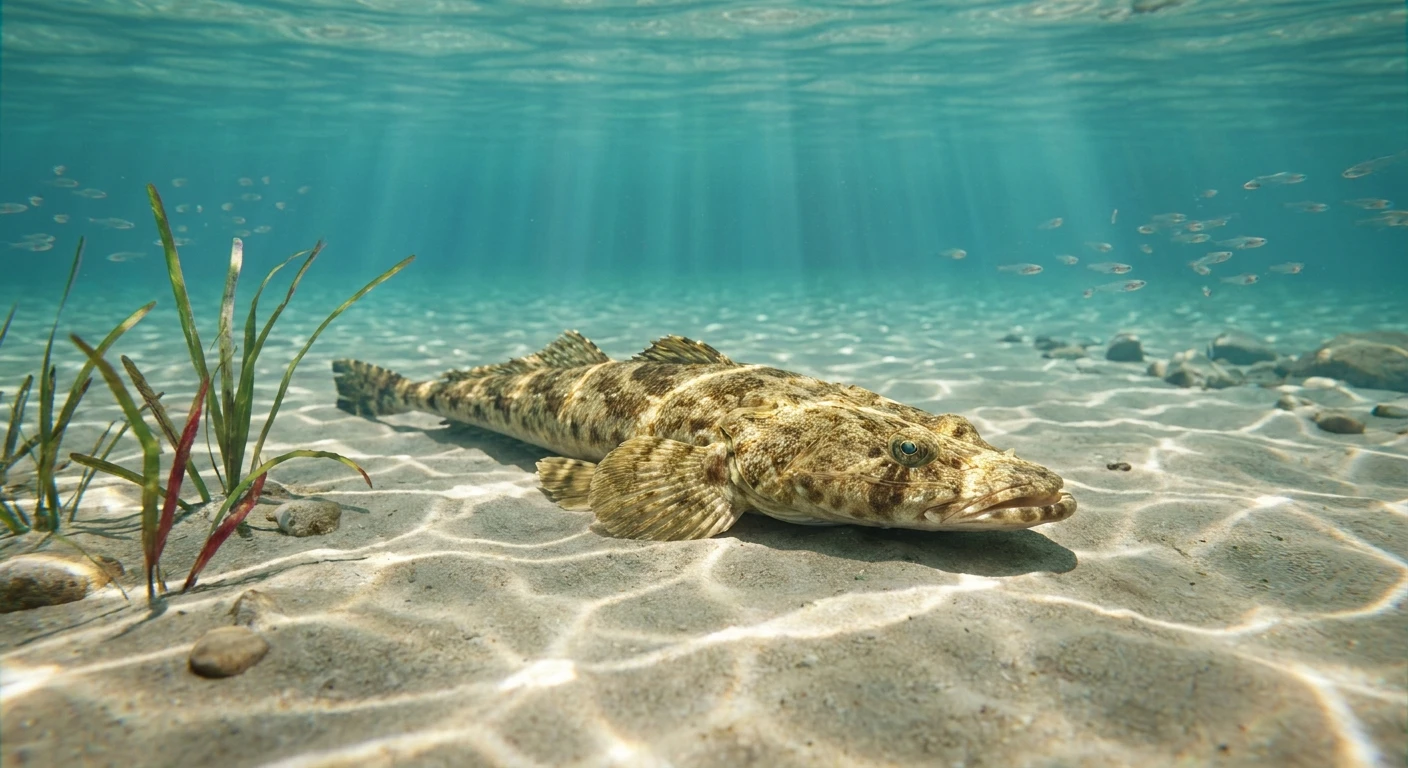
The ancestry of the Platycephalidae family goes back millions of years. These creatures evolved in a highly competitive marine environment where hiding was the only way to survive and eat. Over countless generations, their bodies flattened out completely. Their eyes migrated to the very top of their heads, allowing them to bury themselves almost entirely in the sand while keeping a full field of vision overhead. It is a stunning example of evolutionary perfection. They became the ultimate biological landmines, just waiting for an unsuspecting prawn or baitfish to swim too close.
Evolution of Angling Techniques
Fishing for them used to be incredibly rudimentary. Indigenous coastal communities mastered the art of spearing them in the shallow sea grass beds during low tide, using nothing but incredible patience and sharp eyesight. Later, early recreational anglers used heavy handlines loaded with lead sinkers and chunks of rotting meat. It was effective, but it completely lacked finesse. Over the decades, everything shifted. The introduction of lightweight graphite rods and braided fishing lines completely changed the game, allowing anglers to feel the tiniest taps on their lures.
Modern State of the Fishery
Fast forward to 2026, and the pursuit of these fish resembles a high-tech video game. Anglers now rely heavily on forward-facing sonar technology to spot individual fish resting on the sandbanks before even making a cast. We also use fully biodegradable lures to protect the delicate marine ecosystems. Catch and release has become the overwhelming standard for the massive breeding females. Anglers everywhere now realize that protecting the large ‘crocodiles’ is the only way to ensure the fishery thrives for the next generation. It is a beautiful shift from harvest to conservation.
The Anatomy of an Ambush Predator
Let’s talk about the biological machinery that makes this fish so deadly. Their camouflage is driven by special skin cells called chromatophores. These cells allow the fish to subtly shift its coloration to match the surrounding environment perfectly, whether that is bright white sand, dark river mud, or mottled weed beds. Beyond just looking invisible, they rely on an advanced lateral line system running down the sides of their bodies. This organ detects microscopic vibrations in the water column. Even in totally muddy water with zero visibility, they can perfectly track the erratic swimming pattern of a wounded mullet.
Environmental Adaptations
The mechanics of how they actually capture their prey is terrifying if you are a small fish. They don’t just bite; they inhale. Here are some wild scientific facts about their adaptations:
- Vacuum Feeding Mechanism: When prey comes within striking distance, they open their massive jaws in a fraction of a second. This rapid expansion creates an intense negative pressure vacuum that literally sucks the prey, and a bunch of water, directly into their stomach.
- Venomous Spines: They possess incredibly sharp dorsal and preopercular spines. While not strictly lethal to humans, these spines carry a mild mucous toxin. A prick will cause intense, throbbing pain and localized swelling that can ruin your weekend.
- Sexual Dimorphism: The males generally stay quite small, rarely exceeding 50 centimeters. Almost every single trophy-sized monster you see photographed is a female. They grow substantially larger to carry millions of eggs.
- Independent Eye Movement: Their protruding eyes can move independently of one another, giving them nearly a 360-degree view of the water column above them without moving a single muscle.
Day 1: Gear Selection and Rigging
Start your week by getting the right setup. Grab a 7-foot, medium-light spinning rod paired with a 2500-size reel. Spool it up with 10-pound braided line and attach a high-quality 15-pound fluorocarbon leader. This combo gives you the casting distance you need while maintaining the strength to withstand their raspy teeth.
Day 2: Mastering the Soft Plastic Hop
Head down to the water and tie on a paddle-tail soft plastic lure. Cast it out, let it sink completely to the bottom, and then give the rod tip two sharp upward flicks. Let it sink back down. That pause is exactly when the fish will strike. Practice this rhythm until it becomes second nature.
Day 3: Locating the Drop-Offs
Spend today scouting. You are looking for areas where shallow sandflats suddenly drop away into deeper water. These ambush predators love to sit right on the edge of these drop-offs, waiting for the outgoing tide to sweep small baitfish directly over their heads.
Day 4: Tidal Movements and Timing
Timing is absolutely everything. Focus your entire effort on the last two hours of the falling tide and the first hour of the rising tide. This forces the baitfish out of the protective mangroves or shallows and right into the strike zones.
Day 5: Live Bait Tactics
Take a break from artificial lures. Catch some live poddy mullet or shrimp. Rig them lightly with a small sinker so they can swim naturally near the bottom. The panicked vibrations of a live bait will draw strikes from the most stubborn, inactive fish.
Day 6: Night Fishing Strategies
They get highly aggressive after dark. Switch to dark-colored lures that cast a solid silhouette against the moonlight. Fish the extremely shallow edges where prawns flick around at night. You will be shocked by how big the fish are in knee-deep water.
Day 7: Handling and Processing Your Catch
Finally, you landed one. Use a landing net to avoid those nasty spines. Use a pair of lip grips to safely secure the jaw. If it’s a giant female, snap a quick photo and slide her back into the water to breed. If it’s a mid-sized male, bleed it immediately and put it on ice for the best quality fillets.
Separating Fact from Fiction
There is a lot of absolute nonsense floating around the fishing community regarding these creatures. Let’s clear the air and look at the facts.
Myth: You need heavy offshore gear to catch a truly big one.
Reality: Light tackle actually works significantly better. Lighter line allows your bait or lure to sink much more naturally, fooling older, wiser fish.
Myth: They only eat dead, smelly bait sitting motionless on the bottom.
Reality: They are hyper-aggressive ambush predators. They will actively chase down fast-moving lures, topwater poppers, and live bait.
Myth: The spikes on their heads are deadly poisonous.
Reality: The sting is undeniably painful due to mild toxins and bacteria, but it is rarely dangerous unless you let the puncture wound get severely infected.
Myth: You have to fish in deep, dark ocean water to find them.
Reality: Huge, trophy-sized specimens are frequently caught hunting in water less than two feet deep.
Frequently Asked Questions
What is the best tide?
The run-out tide is universally the best time, as it funnels prey off the flats and directly into deeper channels where the predators wait in ambush.
Do they have sharp teeth?
They don’t have large fangs, but their jaws are lined with thousands of tiny, abrasive, sandpaper-like teeth that easily destroy weak line.
Are they safe to eat?
Yes, they are considered one of the finest eating fish available, with superb white, flaky flesh that cooks beautifully in a pan.
What size lure works best?
Stick to soft plastics between 3 and 5 inches for the best overall hook-up rates.
Are they related to catfish?
No, despite the somewhat similar flattened head and bottom-dwelling nature, they are entirely different biological families.
How fast do they grow?
They grow quite rapidly in their first few years, but a massive 90-centimeter female could easily be over ten years old.
Do they school up?
While usually solitary hunters, you will often find multiple fish sitting in the same highly productive ambush zone.
If you apply these tactics, respect the tides, and upgrade your tackle, catching a trophy is only a matter of time. Get out there, test these methods, and experience the thrill for yourself! Drop a comment below to let me know how your next trip goes!