
The Enduring Legacy of the Honda Motocompo
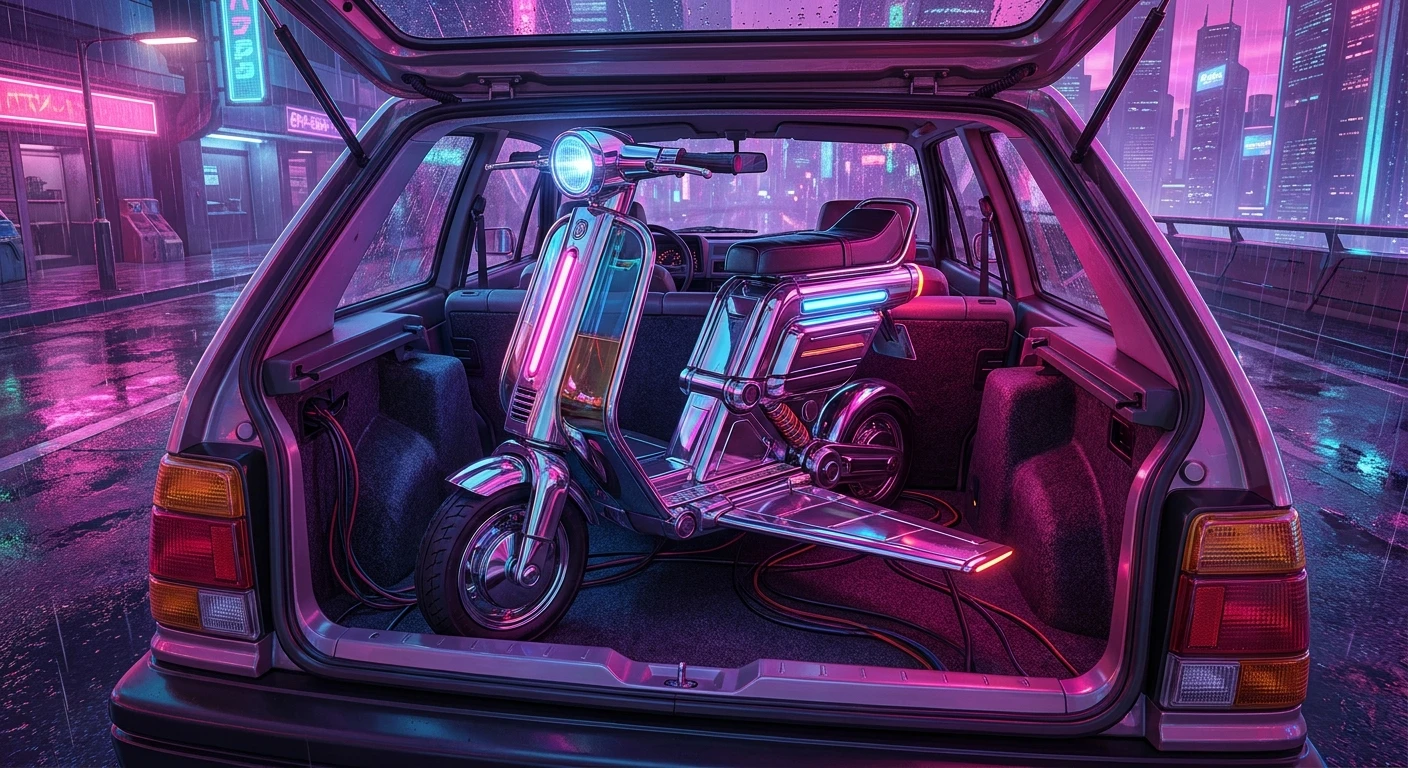
Welcome to the definitive guide on the Honda Motocompo, a brilliantly eccentric piece of 1980s engineering that completely redefined what personal mobility could look like. Long before electric scooters flooded city sidewalks, Japanese automotive engineers dreamed up a gas-powered micro-scooter specifically designed to fit perfectly inside the trunk of a subcompact car. This concept created a seamless transit ecosystem, allowing commuters to drive their car to the city limits, park in cheaper lots, and ride their tiny folding scooter straight to the office door. You get to bypass extreme traffic congestion while riding a machine that looks like a brightly colored piece of rectangular luggage. Producing a vehicle this compact required intense problem-solving, resulting in a machine weighing just 42 kilograms with collapsible handlebars and a seat that drops straight into the chassis. Today, finding a well-preserved unit is the ultimate goal for many vintage motorcycle collectors and retro-futurism enthusiasts. The sheer audacity of the design continues to capture imaginations globally. Its aesthetic remains entirely unique, standing as a historical testament to a remarkably creative period in industrial manufacturing where utility and playfulness were combined without compromise.
Understanding the Value Proposition
Why does a forty-year-old micro-scooter command such fanatical devotion and increasingly high prices at classic automotive auctions? The answer lies in an incredibly specific value proposition that bridges the gap between an enjoyable novelty item and a completely viable urban commuting tool. Enthusiasts and collectors alike recognize that the machine is not just a toy; it is a meticulously engineered vehicle that solves a genuine space problem. You find the appeal split heavily between its undeniable aesthetic charm and its robust mechanical reliability. For example, the seamless integration with the Honda City car dictated the exact cargo dimensions of the automobile itself, proving how serious the manufacturer was about this mobility ecosystem. Another prime example of its value is its status as a blank canvas for modifications; modern owners frequently upgrade the 49cc engine or perform complete electric powertrain conversions to make it faster and cleaner for modern city streets.
Read also: The Ultimate KFC Tower Burger Guide; BYD Shark 6: The Ultimate Plug-in Hybrid Pickup Truck.
| Specification Feature | Technical Value | Practical Significance |
|---|---|---|
| Dry Weight | 42 kg (93 lbs) | Liftable by a single adult straight into a car trunk. |
| Engine Displacement | 49 cc Two-Stroke | No special motorcycle license required in many jurisdictions. |
| Folded Dimensions | 1185 mm x 240 mm x 540 mm | Perfectly matches the cargo floor of a standard hatchback. |
To preserve the immense value of this classic machine over the decades, careful attention to detail is strictly required. Mechanical neglect can quickly turn an expensive collector’s item into a frustrating paperweight. Owners must adhere to rigorous preservation standards. Here are the most critical steps to maintain its mechanical and historical integrity:
- Keep the original plastics completely intact: The rectangular body panels are exceptionally rare, and preserving the factory paint—whether red, yellow, or white—is crucial for maximizing collector market value.
- Maintain the collapsible folding mechanism: You must regularly clean and lubricate the steering column cams and seat hinges to ensure the quick-collapse functionality remains perfectly smooth and requires minimal physical effort.
- Drain the carburetor before horizontal storage: Because these vehicles are heavily designed to be stored flat on their sides inside car trunks, you absolutely must prevent fuel leaks by draining the internal system, keeping the enclosed mechanics pristine and free of fire hazards.
Origins in the 1980s
The early 1980s Japanese automotive industry operated in a climate of rapid economic growth and fierce technical competition. Extreme urban congestion in major metropolitan areas necessitated radical space-saving innovations from top manufacturers. Engineers recognized that parking a full-sized car in dense commercial districts was rapidly becoming impossible and financially prohibitive for average workers. The immediate solution was the revolutionary Trunk Bike concept. Officially branded as the NCZ50, this micro-machine was born from an ambitious desire to create a completely holistic commuting ecosystem. The engineering team was heavily tasked with building a motorized two-wheeler small enough to be carried around like a heavy piece of luggage, yet durable enough to survive daily street riding. This required an entirely new approach to frame geometry and component packaging.
Evolution of the Trunk Bike
During its relatively brief primary production run between November 1981 and 1983, the scooter did not undergo massive generational redesigns, but the evolution of its marketing strategy was truly remarkable. Initially pitched simply as an optional accessory to be purchased alongside the brand new Honda City subcompact car, it quickly established an independent pop-culture identity. It was sold in three highly distinct primary colors: Shetland White, Daisy Yellow, and Caribbean Red. Despite successfully manufacturing over 50,000 units, the initial showroom sales figures fell short of the company’s massively aggressive targets. The concept was undeniably ahead of its time. The general public adored the aesthetic idea, but the physical reality of manually lifting a 42-kilogram chunk of metal and plastic in and out of a vehicle trunk twice a day proved slightly cumbersome for the average commuter.
Modern State and Collector Culture
Fast forward to the present era, and the cultural cachet surrounding this exact micro-scooter has completely skyrocketed beyond all expectations. It has transitioned from a quirky historical footnote to a highly sought-after vintage icon. Prices at classic motorcycle and car auctions have surged dramatically, often significantly surpassing the current market value of the very subcompact cars they were originally meant to ride inside. Dedicated enthusiasts fiercely hunt for original factory decals, vintage service manuals, and extremely scarce replacement body parts. It frequently makes high-profile appearances in elite car shows, popular video games, and prominent automotive history museums. It is widely celebrated as the true pioneer of the modern micro-mobility movement, directly paving the way for the thousands of electric scooters scattered across major city streets right now.
The 49cc Two-Stroke Powerplant
Beneath the brightly painted plastic rectangular shell lies an absolute marvel of mechanical packaging efficiency. The internal combustion engine is a meticulously air-cooled, two-stroke 49cc single-cylinder AB12E motor that produces exactly 2.5 horsepower at 5,000 RPM. Engineering a highly reliable engine to operate efficiently inside such a restrictive thermal envelope required extremely clever heat dissipation strategies. Because the thick body panels enclose the engine entirely, the intake air and exhaust routing had to be strictly controlled by the engineers to prevent catastrophic overheating during summer riding. Furthermore, the drivetrain utilizes a single-speed automatic centrifugal clutch system. This deliberately simple transmission allows the rider to simply twist the throttle grip and accelerate smoothly without dealing with the complication of a manual foot shifter, making it highly accessible to complete novices.
The Folding Mechanism Engineering
The single most technically impressive aspect of the entire machine is undoubtedly its flawlessly engineered collapsible nature. Designing a steering column that can safely fold down without ever compromising structural integrity during a high-vibration ride is a remarkably complex mechanical challenge. The dual handlebars utilize a heavy-duty locking cam mechanism equipped with threaded knobs that allows them to instantly drop perfectly flush with the flat top of the body casing.
- Sealed fuel tank system: Engineered with specialized mechanical breathers to entirely prevent raw gasoline from leaking out when the scooter is deliberately laid horizontally inside a vehicle trunk.
- Telescopic seat post: The thickly padded saddle drops directly down into the steel chassis, minimizing the maximum vertical profile to a mere 540 millimeters when completely collapsed.
- Integrated lifting points: The rigid steel frame features internally reinforced grab handles that precisely balance the 42kg wet weight for safe and ergonomic manual lifting.
- Automatic oil injection system: Utilizes a separate dedicated two-stroke oil reservoir, completely eliminating the annoying need for the rider to manually premix raw fuel and oil before filling up the main gas tank.
Day 1: Sourcing a Japanese Import Candidate
Finding a mechanically viable unit requires significant patience and research. You need to thoroughly scour Japanese auction proxy sites, specialized classic motorcycle importers, and vintage enthusiast forums. Expect to pay a massive premium for a complete unit that features uncracked original plastic body panels, as these external parts are no longer manufactured and are practically impossible to source independently. Focus strictly on the structural integrity of the frame over whether the engine currently runs.
Day 2: Initial Inspection and Component Cleaning
Once you acquire your prized machine, perform a totally comprehensive visual inspection in a well-lit garage. Remove the rectangular plastic casing extremely carefully to actively avoid snapping the fragile forty-year-old plastic mounting tabs. Wash the exposed steel tube frame and the greasy engine block using a mild automotive degreaser to easily identify any hidden two-stroke oil leaks or dangerous hairline stress fractures near the steering neck.
Day 3: Fuel System Overhaul and Tank Rust Removal
The tiny original Keihin carburetor is notoriously finicky after sitting idle for decades. You must completely remove, fully disassemble, and aggressively ultrasonic clean the entire carburetor body to clear clogged pilot jets. Thoroughly flush the 2.2-liter metal fuel tank with a chemical rust remover. Replace all vintage rubber fuel lines immediately, as the high ethanol content found in modern street gasoline actively degrades classic Japanese rubber components.
Day 4: Spark, Ignition, and Electrical Check
Start by installing a brand new, fully charged 6-volt battery. Use a multimeter to strictly test the vintage ignition coil, inspect the fresh spark plug gap, and verify the magneto output. You must carefully ensure the original orange turn signal indicators and the highly distinctive square halogen headlight are receiving the proper voltage and functioning correctly to maintain full street legality.
Day 5: Drum Brakes and Vintage Tires Maintenance
The remarkably tiny 8-inch solid steel wheels and mechanical drum brakes must be heavily inspected for safety. Replace the internal brake shoes completely and generously lubricate the heavy steel brake cables to guarantee smooth, predictable stopping power. You absolutely must mount fresh 2.50-8 modern tires, as the original vintage rubber will undoubtedly be dangerously dry-rotted and entirely unsafe for actual road use.
Day 6: Folding Mechanism Lubrication
The heavy-duty folding handlebars and the sliding seat column are the defining functional features of the bike. Use a high-quality synthetic white lithium grease liberally on the steel locking cams and the internal sliding metal tubes to definitively ensure they collapse smoothly and lock back firmly into place without requiring excessive physical force from the rider.
Day 7: Final Assembly and Street Test Ride
Carefully reinstall the freshly polished painted plastic shells, double-checking that all rubber vibration isolation grommets are properly seated against the frame. Mix a fresh batch of high-octane fuel, verify the two-stroke oil reservoir is full, kick-start the engine, and safely take it for a slow, methodical shakedown cruise around a perfectly flat, empty parking lot to officially verify the engine tuning and brake responsiveness.
Myths and Reality of the Micro-Scooter
Let us thoroughly clear up several common misconceptions surrounding this legendary folding scooter. There is plenty of misinformation passed around by people who have never actually turned a wrench on one.
Myth: The machine is legally classified purely as a toy and cannot be ridden on public roads under any circumstances.
Reality: It is an entirely street-legal motor vehicle in most global jurisdictions, factory-equipped with a stamped VIN, functional turn signals, dual mirrors, and a bright brake light. You simply need the proper local registration and appropriate license plates.
Myth: You have to carry a measuring cup and manually mix two-stroke oil and gasoline together every single time you fill up at the station.
Reality: The bike features a highly reliable automatic mechanical oil injection pump with a dedicated oil tank perfectly hidden under the seat, mixing it completely seamlessly with the gasoline from the main tank as you ride.
Myth: The scooter is incredibly light, weighing practically nothing, and is completely effortless to carry around like a small briefcase.
Reality: At 42 kilograms (nearly 93 pounds), physically lifting it into the high trunk of a car requires significant upper body physical effort and strictly proper lifting technique utilizing the specifically designed built-in frame handles.
Myth: It was a massive commercial failure that severely damaged the reputation of the manufacturer during the 1980s.
Reality: While it definitely missed the highly aggressive early sales projections set by executives, successfully selling over 50,000 units makes it a highly notable production success that completely covered its initial research and development costs.
How fast does it actually go?
The 49cc engine comfortably cruises on flat ground at around 30 km/h (18 mph). If you hold the throttle wide open on a perfectly smooth surface, it features a strict maximum top speed nearing 40 km/h, though this heavily depends on the physical weight of the rider and current wind conditions.
Can it physically fit in modern cars?
Yes, absolutely. Its highly compact folded dimensions (1185mm long by 240mm wide by 540mm tall) easily allow it to fit securely in the cargo trunks of most modern compact hatchbacks, large sedans, and sport utility vehicles without any major issues.
Is it difficult to find spare mechanical parts?
Internal engine components are actually relatively common and affordable because the motor shares many mechanical parts with other high-volume 50cc scooters from the same era. However, the original cosmetic plastic body panels and factory specific decals are exceptionally rare and highly expensive.
What is the official fuel economy?
When ridden at a steady, uninterrupted speed of 30 km/h, the highly efficient little engine achieves an incredibly impressive theoretical factory rating of approximately 70 kilometers per liter (roughly 165 miles per gallon).
Are there modern electric conversions available?
Yes, there is a rapidly growing international community of custom builders who completely swap out the smoky 49cc two-stroke internal combustion engine for highly efficient modern electric hub motors and dense lithium-ion battery packs to create silent urban commuters.
Did it come in any color other than red, white, or yellow?
No. During its official factory production run, Caribbean Red, Shetland White, and Daisy Yellow were the absolute only three official paint colors ever manufactured and sold to the general public.
Do I explicitly need a dedicated motorcycle license to ride one?
In many global regions and local jurisdictions, the extremely small 49cc engine displacement legally allows the vehicle to be ridden on public streets by anyone holding a standard, basic automobile driver’s license, though local laws always strictly dictate the exact legal requirements. The enduring charm of this incredibly tiny machine effortlessly proves that brilliant, uncompromising design completely defies the passage of time. If you are entirely ready to start your own elite retro garage collection, aggressively hunt one of these units down today and intimately experience the genuine joy of riding the original, undisputed trunk bike!