
The Complete Guide to Understanding Kieran Foran
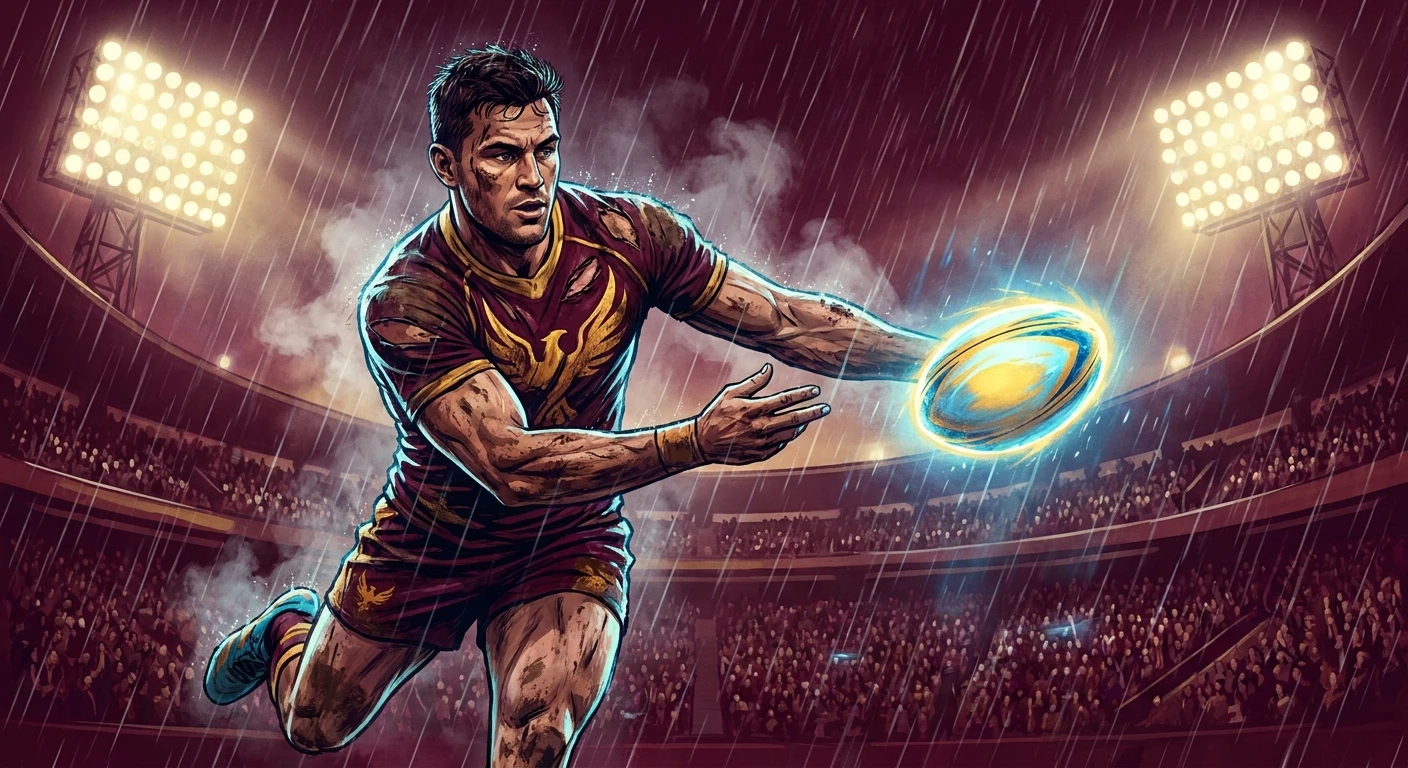
When you talk about rugged, uncompromising playmakers in modern rugby league, Kieran Foran immediately dominates the conversation. You do not just survive over a decade in the National Rugby League (NRL) without possessing an extraordinary blend of physical toughness and elite cognitive processing. Kieran Foran represents the gold standard for halves who are willing to take the ball right up to the defensive line, absorbing brutal contact to create space for their outside backs. His style of play completely redefines what is expected of a traditional five-eighth. Instead of sitting back and directing traffic from a safe distance, he engages defenders directly, forcing them to commit before he unleashes a perfectly timed pass. This approach has earned him immense respect across the sporting landscape. Playing at the international level for the New Zealand Kiwis and leading multiple NRL clubs, his journey offers a masterclass in resilience, tactical execution, and leadership. You will find that analyzing his career provides a perfect window into the evolution of rugby league tactics over the past fifteen years. Whether orchestrating a premiership-winning campaign or mentoring the next generation of halves, his influence on the field is absolute. To truly appreciate the mechanics of professional rugby league, examining his specific attributes, structural understanding, and unmatched tenacity is essential.
Defining the Ultimate Playmaking Value
The core value proposition of Kieran Foran lies in his ability to manipulate defensive structures while acting as an auxiliary forward in defense. Most halves are targeted by opposing back-rowers to tire them out and reduce their attacking potency. Foran turns this paradigm upside down by actively relishing physical confrontation. His defensive grit acts as a stabilizing force for his edge, ensuring that his team does not leak points through the channels he defends. Offensively, his value shines through two main examples. First, his short-passing game at the line frequently isolates slower defenders, creating line-breaks for second-rowers running sharp angles. Second, his leadership provides a calming presence during chaotic game scenarios, allowing younger teammates to focus purely on their roles without overthinking the overarching strategy. His career spans several distinct eras across different clubs, proving his adaptability.
Read also: Hamiso: The Ultimate Guide to Rugby League's Fastest Star; Reed Mahoney: Career, Stats, and Rugby League Impact.
| NRL Club | Active Years | Key Tactical Role and Impact |
|---|---|---|
| Manly Warringah Sea Eagles | 2009-2015, 2021-2022 | Primary playmaker, defensive enforcer on the edge, and key architect of their 2011 premiership victory. |
| Canterbury-Bankstown Bulldogs | 2018-2020 | Veteran leadership, structural organization, and primary offensive catalyst during a challenging rebuilding phase. |
| Gold Coast Titans | 2023-Present | Mentorship of emerging halves, controlling match tempo, and executing high-percentage kicking games. |
To break down what makes his skill set so highly sought after by coaches, you need to look at three foundational pillars of his game:
- Fearless Line Engagement: He consistently narrows the gap between himself and the defense, committing multiple tacklers before releasing the ball. This creates numerical advantages on the edges.
- Defensive Robustness: Unlike traditional playmakers who require protection from their forwards, he executes dominant tackles, often stopping momentum single-handedly.
- Game Management and Tempo: He possesses an innate understanding of when to push the pace and when to slow the game down with a tactical kick, ensuring his team maintains territorial dominance.
The Origins of a Playmaker
Tracing the roots of Kieran Foran brings you to a story of raw talent cultivated through intense dedication. Born in Auckland, New Zealand, he moved to Australia at a young age, blending the flair typical of New Zealand rugby league with the hyper-structured, competitive environment of the Australian junior systems. He played his junior football for the Ellerslie Eagles before joining the Asquith Magpies. This dual-nation upbringing provided him with a unique perspective on the game, merging instinctive ball-playing with rigorous discipline. His junior years were marked by a rapid ascent through the ranks, catching the eye of elite talent scouts who immediately recognized his uncommon maturity and physical readiness for professional football.
Evolution Through Adversity
The middle phase of his career was tested by severe physical and mental hurdles. Professional contact sports extract a heavy toll, and Foran endured a grueling string of injuries that would have easily ended the careers of lesser athletes. Reconstructive surgeries on his shoulders, back, and lower body meant he had to continually adapt his biomechanics and playing style. Rather than relying solely on the explosive agility of his youth, he evolved into a cerebral tactician. He learned to read defensive shifts fractions of a second earlier, compensating for any loss in raw pace with superior anticipation. This evolution required immense psychological fortitude, showcasing a blueprint for long-term athletic survival.
Modern State and Legacy
Today, Kieran Foran operates as an on-field coach. His transition into the later stages of his career with clubs like the Gold Coast Titans highlights his enduring value. Teams no longer sign him expecting the blistering 20-year-old who took the league by storm; they acquire a battle-hardened general capable of accelerating the development of entire rosters. His legacy is firmly cemented as one of the toughest New Zealand representatives to ever lace up boots. He has redefined the physical expectations for the number six jersey, leaving a lasting template for junior pathways programs to emulate across both hemispheres.
Tactical Anatomy of a Halves Pairing
To truly grasp his on-field impact, you must analyze the mechanics of a rugby league halves pairing. The relationship between a halfback and a five-eighth dictates the offensive rhythm of the entire squad. Foran typically operates on the left edge, functioning as the primary distributor for sweeping backline movements. He utilizes second-man plays to perfection, offering short passes to lead runners or sweeping the ball out the back to a lurking fullback. This structural setup forces the opposing defensive line to make split-second decisions. If defenders rush up to shut down the short pass, he effortlessly lofts the ball out wide. If they hold back, he accelerates into the gap himself. This constant manipulation of defensive spacing is a highly technical skill honed through thousands of hours of video analysis and repetition.
Biomechanics of Passing and Tackling
The physical execution of his playstyle is rooted in highly efficient biomechanics. When digging into the line, he lowers his center of gravity, generating power from his hips rather than just his upper body. This low body height allows him to absorb impacts safely while maintaining the balance required to deliver a precision pass. Defensively, he utilizes a textbook kinetic chain, driving through the target with his shoulders and wrapping the legs, nullifying the size advantage of much larger opponents.
- Visual Processing Speed: Studies on elite playmakers show they process peripheral movement up to 30% faster than average players, allowing them to spot defensive misalignments instantly.
- Force Absorption: Taking the ball to the defensive line involves absorbing forces exceeding 3G upon impact; maintaining ball control during this collision requires exceptional core stability.
- Neuromuscular Adaptation: Recovering from multiple joint reconstructions requires rewriting motor patterns, meaning his brain has successfully mapped new ways to generate passing velocity without overloading damaged ligaments.
Day 1: Analyzing Line Engagement
Start your structural breakdown by watching footage of his offensive sets inside the opposition’s twenty-meter zone. Focus entirely on his footwork right before he passes. You will notice he rarely passes flat-footed; he is always stepping toward the defensive line. Count how many defenders turn their shoulders inward to watch him, effectively leaving the edge attackers unmarked. This is the art of line engagement.
Day 2: Studying Defensive Structures
Shift your attention to his defensive sets. Watch how he positions himself relative to his inside center and outside winger. Notice his communication, pointing and shifting his teammates to cover gaps. Analyze his tackling technique against larger forwards, paying close attention to his initial contact point and leg drive, which halts momentum immediately.
Day 3: Evaluating Passing Selection
Dedicate this phase to understanding his decision-making matrix. Track every pass he makes in a single half of football. Categorize them into short balls, sweeping cut-out passes, and inside drop-offs. Look for the specific defensive cues that trigger each type of pass. Usually, a rushing defender triggers a short ball, while a retreating line invites a sweeping pass.
Day 4: Breaking Down Kicking Games
A playmaker is only as good as their fifth-tackle options. Review his short kicking game, particularly his grubber kicks into the in-goal area. Observe the weight of the kick, the angle of his boot, and how he uses the defensive line’s momentum against them to force repeat sets.
Day 5: Assessing Off-the-Ball Movement
What a player does without the ball is often more critical than what they do with it. Track his support runs. When a teammate makes a break, he is consistently pushing up through the middle third of the field, anticipating offloads. This work rate is a testament to his aerobic conditioning and game awareness.
Day 6: Reviewing Injury Rehabilitation Protocols
Study the publically available details of his recovery regimes. Understanding the sports science behind shoulder reconstructions and hamstring management provides context for his longevity. Look at how load management and modified training schedules have allowed him to maintain peak performance on game day.
Day 7: Synthesizing Playmaker Influence
Combine all your observations into a comprehensive understanding of his overall match influence. Compare a game where he is absent from the lineup to one where he is directing traffic. The difference in offensive structure, completion rates, and defensive resilience will clearly highlight his irreplaceable value to the team dynamic.
Myths and Reality of Playmaking
Myth: Elite playmakers rely purely on natural, unstructured flair to break down defenses.
Reality: While flair exists, consistent success is born from rigorous video analysis, repetitive structural drilling, and a deep understanding of defensive geometry.
Myth: Halves do not need to be strong defenders; they just need to tackle adequately.
Reality: Kieran Foran proves that dominant defensive halves neutralize the opposition’s attacking strategies, forcing them to rethink their edge targeting completely.
Myth: Severe injuries early in a career guarantee a short playing lifespan.
Reality: Through meticulous rehabilitation, biomechanical adjustments, and supreme mental toughness, players can rebuild their bodies to compete effectively well into their thirties.
Frequently Asked Questions
What position does Kieran Foran play?
He primarily plays as a five-eighth (number six) but is highly capable of operating as a halfback (number seven) when team structures require it.
Which national team does he represent?
He represents the New Zealand Kiwis, having been a pivotal figure in their international campaigns and tournament successes for many years.
When did he make his first-grade debut?
He debuted in the NRL for the Manly Warringah Sea Eagles in 2009, immediately making a strong impression with his maturity and toughness.
What is his most notable career achievement?
Winning the 2011 NRL Premiership with Manly remains a crowning achievement, alongside multiple prestigious international victories with New Zealand.
How has he managed his injuries?
He utilizes advanced sports science, strict load management, and tailored strength and conditioning programs to maintain his physical readiness for the rigors of the NRL.
Why is his defensive style unique?
Unlike many halves who employ a catch-and-wrestle technique, he initiates dominant shoulder contact, frequently halting larger forwards right in their tracks.
What impact does he have on younger players?
His presence provides tactical stability. He acts as a mentor, teaching younger halves the nuances of game management and emotional control under extreme pressure.
Understanding the career of Kieran Foran offers deep insights into the physical and mental requirements of professional rugby league. His journey from a talented junior to a respected veteran encapsulates the essence of resilience and tactical mastery. If you want to elevate your understanding of sports tactics and player development, start analyzing his match footage today and apply these lessons to your own strategic thinking.