
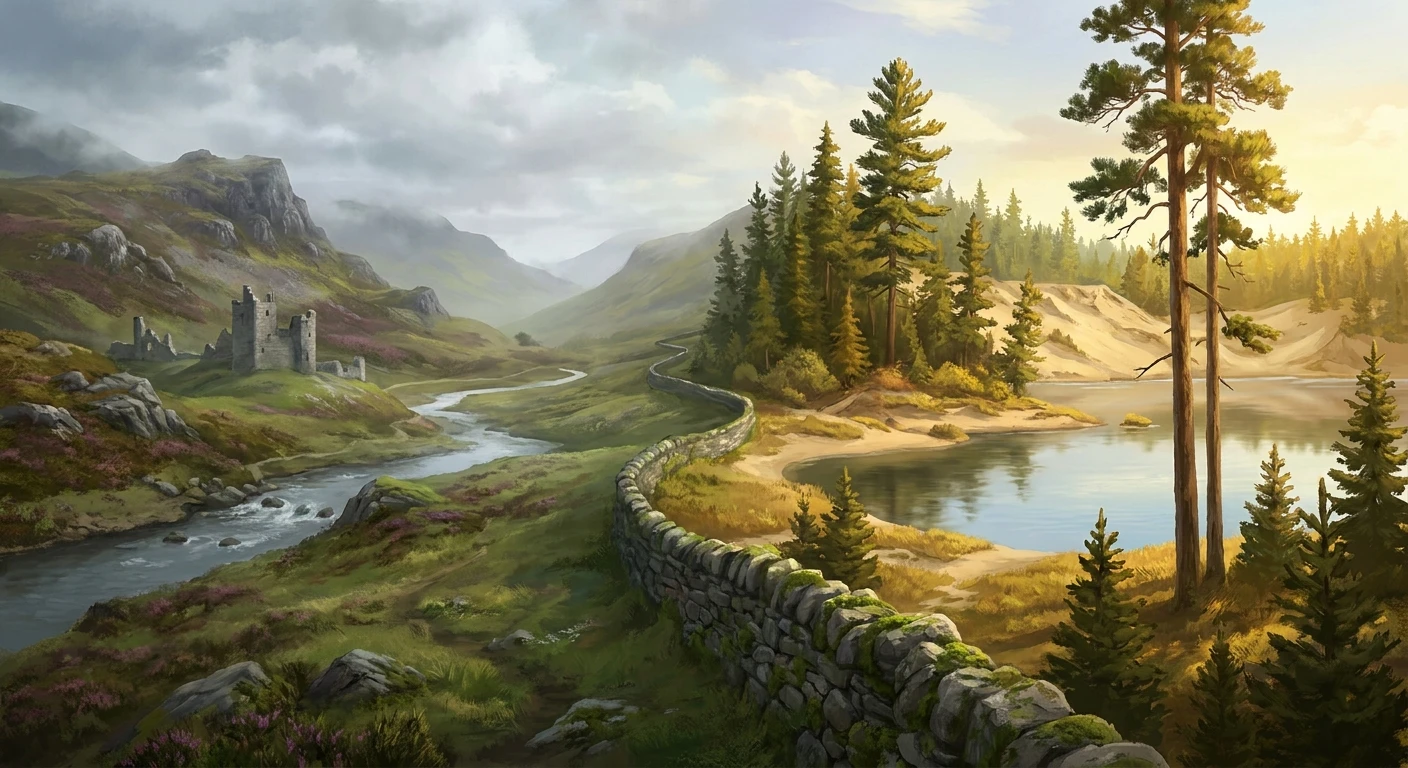
Comprehensive Guide to Sandilands: Heritage and Landscapes
You hear the name Sandilands and might instantly think of the sprawling provincial forest in Manitoba, Canada, or perhaps the historic Scottish clan that carries this noble title. Sandilands represents a fascinating intersection of human genealogy and environmental conservation. The legacy spans centuries, originating from the rugged landscapes of Scotland to becoming a prominent geographical marker in North America and coastal England. Grasping the full scope of what this name encompasses requires looking at ancient lineages, unique glacial geologies, and modern recreational forestry.
Whether you are tracing your family tree back to the Lords of Torphichen or packing your hiking gear to explore the sandy eskers of the Canadian wilderness, this guide breaks down the essential facts. You will find a detailed breakdown of the ecological significance, historical origins, and actionable travel plans for exploring the famous forestry areas. There is no superficial overview here; we are looking straight at the verified data, scientific realities, and practical steps to understand and experience these distinct locations. The connections between a medieval surname and vast protected biomes offer a unique perspective on how human history and natural geography share common identifiers across the globe.
Read also: Understanding the Legacy of Eurydice Dixon in Society; Mastering brisbane house prices Fast.
The Core Significance: From Noble Roots to Protected Wilds
Understanding the varied contexts of Sandilands requires looking at the specific benefits and values associated with its different geographical and historical forms. For genealogists and historians, the Scottish lineage provides a direct window into the feudal land distribution and the shifting powers of the Knights Hospitaller. For geologists and outdoor enthusiasts, the North American forest provides a pristine, accessible look into post-glacial landscapes and sustainable forestry management. Recognizing these different facets prevents confusion and highlights the distinct value of each.
Here is a detailed comparison of the primary global entities carrying the name:
| Entity Type | Primary Location | Key Defining Characteristics |
|---|---|---|
| Historical Lineage (Clan Sandilands) | Lowlands, Scotland | Descendants of Sir James Sandilands; closely tied to the Lords of Torphichen and Scottish nobility. |
| Provincial Forest | Manitoba, Canada | Vast tracts of jack pine, sandy glacial eskers, and protected recreational wilderness. |
| Coastal Village | Lincolnshire, England | Quiet seaside community known for uncrowded beaches and traditional British coastal architecture. |
When you focus specifically on the natural environments and regional parks bearing the name, you discover a multitude of practical benefits for visitors and researchers alike. The natural preserves act as critical ecological sinks and outdoor laboratories.
- Biodiversity Preservation: Protected forest areas serve as crucial habitats for diverse flora and fauna, specifically species adapted to sandy, well-drained soils.
- Geological Observation: The visible remnants of glacial movements provide field researchers with immediate access to ancient earth-shaping processes.
- Sustainable Recreation: Designated trails and managed zones allow for high-volume tourism without degrading the underlying natural infrastructure.
- Historical Record Keeping: Clan archives provide continuous, unbroken records of land ownership and political shifts spanning over six hundred years.
The Deep History of the Name and Locations
Origins of the Clan
The historical trajectory of the name begins in the Scottish Lowlands. The earliest records trace the family back to the 14th century, heavily linked to the lands of Sandilands in Lanarkshire. The family gained significant prominence when Sir James Sandilands received a charter of lands from King David II. Their influence peaked when a descendant, also named Sir James, became the Preceptor of the Knights Hospitaller in Scotland. When the Reformation swept through, he surrendered the Hospitaller lands to the Crown and was subsequently created Lord Torphichen. This established a permanent, documented lineage that remains an active part of Scottish peerage.
Evolution and Geographic Migration
As centuries passed, economic shifts and the expansion of the British Empire led to significant migration. People carrying the surname traveled across the Atlantic to North America and south into England. Concurrently, explorers and settlers began applying familiar names to new geographical discoveries. In England, the coastal hamlet in Lincolnshire developed as a quiet retreat, taking on the name and maintaining a modest, traditional seaside culture. In Canada, surveyors and early settlers mapped out the southeastern regions of Manitoba, designating specific forestry zones that eventually took on the moniker due to their distinctly sandy terrain and historical settlement patterns.
Modern State of Sandilands Communities
Today, the physical locations function as vital community hubs and protected zones. The Clan continues to hold its historical seat, participating in heritage societies and maintaining ancestral records. The Lincolnshire village remains a tranquil alternative to heavily commercialized British beaches, fiercely protecting its quiet aesthetic. Meanwhile, the Manitoba provincial forest represents a modernized approach to land management, balancing logging interests with indigenous land rights, recreational vehicle usage, and strict environmental conservation protocols. These disparate entities all function successfully within their specific modern contexts.
Scientific and Technical Deep Dive: The Forest Ecology
Boreal Forest Dynamics and Glacial Geology
The ecological marvel of the Sandilands Provincial Forest in Manitoba is rooted entirely in its glacial history. Thousands of years ago, the region was submerged under Lake Agassiz, a massive glacial lake. As the ice retreated and the lake drained, it left behind enormous deposits of sand and gravel. These formations, known as eskers and moraines, dictate the entire ecosystem. The soil here drains water exceptionally quickly, creating a harsh environment for typical broadleaf trees. Instead, the area is dominated by flora that thrives in dry, nutrient-poor conditions. The jack pine is the quintessential species of this region, highly adapted to both the sandy soil and the natural cycle of forest fires, which are necessary for its cones to open and release seeds.
Hydrological Impact on Local Ecosystems
Water movement through these sandy ridges behaves very differently than in clay-heavy soils. Precipitation penetrates the surface rapidly, recharging underground aquifers rather than pooling on the surface. This creates distinct micro-climates within the forest.
- Rapid Infiltration Rates: The high porosity of the sand means surface runoff is minimal, protecting the area from sudden flash floods but making the topsoil incredibly dry.
- Aquifer Recharging: The forest acts as a massive natural filter, catching rainwater and snowmelt, slowly feeding the aquifers that supply water to surrounding agricultural zones.
- Fire Ecology Dependency: Because the soil holds little moisture during summer heatwaves, the region is highly susceptible to natural wildfires, which are a scientifically necessary process for boreal forest regeneration.
- Specialized Understory: The ground cover is dominated by hardy lichens, mosses, and low-bush blueberries that can survive high acidity and low moisture.
Actionable Plan: 7-Day Sandilands Exploration Guide
If you are planning an expedition to the Sandilands Provincial Forest, you need a structured approach to safely and thoroughly experience the terrain. This seven-day itinerary covers everything from initial orientation to deep backcountry navigation.
Day 1: Base Camp Setup and Orientation
Arrive at the designated camping zones near the perimeter of the provincial forest. Focus your first day on securing your campsite, testing your gear, and familiarizing yourself with the local trail maps. Speak with forestry rangers to get real-time updates on trail conditions and fire hazard warnings.
Day 2: Glacial Ridge Hiking
Dedicate your second day to hiking the eskers. These raised sandy ridges offer the best vantage points and the most stable footing. Keep your pace steady and observe the sharp contrast between the elevated dry zones and the lower forested depressions. Wear footwear designed for loose terrain.
Day 3: Flora and Fauna Observation
Shift your focus to the ecosystem. Spend the morning identifying the dominant jack pine stands and searching for the specialized undergrowth like bearberry and wild blueberries. Bring a field guide to track the local bird populations, which utilize the dense canopy for nesting.
Day 4: ATV and Off-Road Exploration
The forest is famous for its extensive network of off-road vehicle trails. Rent or bring an ATV to cover greater distances. Stick strictly to the marked recreational trails to avoid damaging sensitive root systems or disrupting wildlife habitats. Observe trail etiquette when passing hikers.
Day 5: Hydrological and Wetland Study
Navigate toward the edges of the forest where the sandy soil transitions back to traditional marshland. Observe the peat bogs and wetland fringes. This area is critical for understanding how the rapid-draining eskers interact with the broader regional watershed.
Day 6: Backcountry Navigation Practice
Use this day to practice essential wilderness skills. Step slightly off the main trails using only a physical map and a compass (no GPS). The repetitive nature of the jack pine forest makes visual navigation difficult, providing an excellent, safe environment to hone your orienteering abilities.
Day 7: Site Cleanup and Departure
Focus your final morning on the “Leave No Trace” principles. Ensure your campsite is completely clear of debris. Review the data and photos collected during the week, pack your equipment systematically, and check out with the local forestry office before departing the region.
Myths & Reality
Myth: Sandilands is merely a geographical descriptor with no historical human connection.
Reality: It is one of the oldest recorded noble surnames in Scotland, with continuous documented lineage dating back to the 14th century.
Myth: The provincial forest in Manitoba is just standard Canadian wilderness.
Reality: It is a highly specific, geologically unique landscape formed by the sand deposits of the prehistoric glacial Lake Agassiz.
Myth: You can hike anywhere in the provincial forest without preparation.
Reality: The dense, uniform jack pine stands make it incredibly easy to lose your sense of direction; proper navigation tools are mandatory.
Myth: Wildfires in the area permanently destroy the ecosystem.
Reality: The ecosystem is fire-dependent; jack pine cones require the intense heat of a fire to open and release their seeds for regeneration.
Frequently Asked Questions
Where is the original ancestral home of Clan Sandilands?
The original lands are located in the historic county of Lanarkshire in the Scottish Lowlands, with significant later ties to Torphichen in West Lothian.
How large is the provincial forest in Manitoba?
The forest covers hundreds of square kilometers, featuring vast networks of multi-use trails, logging roads, and protected ecological zones.
Is the Lincolnshire coastal village a major tourist resort?
No, it deliberately maintains a quiet, undeveloped atmosphere, making it a peaceful retreat rather than a bustling commercial resort.
Are off-road vehicles allowed in the Manitoba forest?
Yes, but they are strictly restricted to designated trails to prevent severe erosion of the fragile sandy topsoil.
What is the most common tree species in the area?
The jack pine is the dominant species, as it thrives in the dry, acidic, and nutrient-poor sandy soil left by glacial retreats.
Do I need a permit to camp in the provincial forest?
Depending on the exact location and season, specific backcountry or campground permits are required by provincial park authorities.
How did the Scottish clan get its name?
The name is territorial in origin, derived directly from the “sandy lands” of their earliest recorded estates in the Scottish Lowlands.
Can I drink the surface water in the forest?
Surface water is rare due to rapid soil drainage, and any water found in marshy edges must be thoroughly filtered and boiled before consumption.
Conclusion
Exploring Sandilands—whether through the pages of Scottish history, the quiet beaches of Lincolnshire, or the rugged trails of Manitoba—offers a profound look into how environments shape human identity and recreation. The glacial sand ridges are not just geological anomalies; they are the foundation of unique ecosystems and thriving outdoor communities. Take the time to map out your own expedition or research project, and experience the distinct history and ecology firsthand. Start planning your journey or genealogical deep dive today to uncover the full scope of this fascinating subject.