
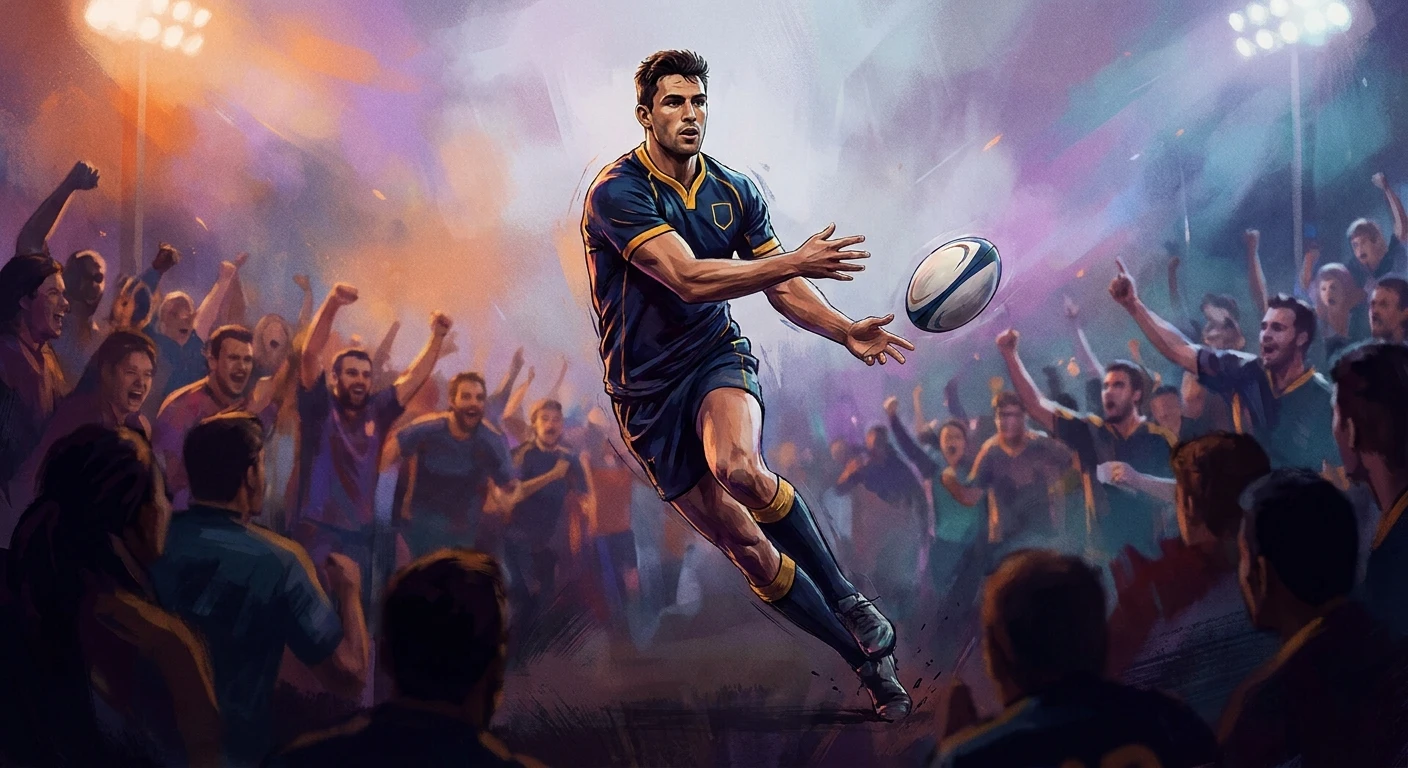
Why Lachie Galvin is Rugby League’s Next Great Halfback
If you are following the next generation of rugby league talent, Lachie Galvin is a name you simply cannot ignore. When it comes to raw talent and field vision, he represents the gold standard of emerging playmakers. Breaking into the highly competitive ranks with an elite skill set, he immediately demanded attention from seasoned coaches, passionate fans, and terrified defensive lines alike. It takes a rare combination of composure and physical presence to thrive in the halves, yet this young prodigy makes the hardest job on the field look entirely effortless. His ability to read the defensive line, coupled with an unorthodox but highly effective passing game, sets him apart from traditional, smaller halves.
We are witnessing the dawn of a career that promises to reshape how teams approach their attacking structures. This isn’t just a brief flash of brilliance; this is a foundational piece for a franchise seeking long-term dominance and premiership glory. Over the course of this extensive breakdown, we evaluate exactly what makes his approach to the game so incredibly unique. From his grassroots junior origins to his undeniable impact at the absolute highest level of the sport, understanding his trajectory offers a masterclass in modern rugby league dynamics. Breaking down the mechanics, the mindset, and the undeniable influence of a player built for the modern era provides a blueprint for the future of the sport.
Read also: Hamiso: The Ultimate Guide to Rugby League's Fastest Star; Kieran Foran: Career, Tactics, and Legacy in Rugby League.
The impact of a commanding halfback extends far beyond mere statistics and post-match highlights. For a team needing direction, putting the ball in the hands of a natural organizer completely shifts the tempo of a match. Lachie Galvin delivers a massive competitive edge: he combines the physical frame of a modern back-row forward with the ball-playing finesse of a traditional number six or seven. For example, when defenses rush up rapidly to stifle the attack, his height allows him to see right over the advancing line and execute sweeping, perfectly timed cut-out passes. Another prime example is his willingness to dig deep into the defensive line before releasing the ball, a fearless trait that draws multiple defenders in and creates massive overlaps for his outside backs.
Understanding his unique skill set requires looking at the specific attributes he brings to the field every single week:
- Fearless Line Engagement: He possesses an elite ability to run directly at the defensive line, holding huge defenders accountable before making a split-second passing decision that exposes their positioning.
- Precision Short Kicking Game: Utilizing a remarkably deft touch, he forces repeat sets and builds unrelenting pressure through perfectly weighted grubbers right into the opposition’s in-goal area.
- Dominant Physical Defense: Unlike smaller halves who often become easy targets for charging opposing forwards, his size allows him to absorb massive contact and make dominant, momentum-halting tackles on the edge.
The contrast between the old-school playmaker and this new archetype is striking. Coaches constantly search for structural advantages, and fielding a halfback who can tackle like a lock forward while passing like a ten-year veteran forces opponents to rewrite their playbooks.
| Attribute | Traditional Halfback Model | The Lachie Galvin Model |
|---|---|---|
| Physicality & Stature | Often undersized, relies heavily on quick agility | Tall, robust, effortlessly absorbs heavy defensive contact |
| Passing Vision | Relies on sweeping backline movements and early shifts | Sees directly over defenders, executes late and decisive offloads |
| Defensive Role | Hidden on the edges, protected by larger teammates | Active participant in dominant edge collisions and wrestling |
Instead of isolating the halfback with giant forwards, opposing teams must respect his strength and adjust their attacking lines. The ripple effect of this physical dominance creates space across the entire park, allowing fullbacks and wingers to exploit broken defensive structures with ease.
The Origins of a Prodigy
Every top-tier athlete starts somewhere, and the grassroots foundation is crucial for developing instinctual, off-the-cuff play. Growing up in the rugby league heartlands, the early days were defined by relentless practice, muddy local fields, and a deep, consuming love for the game. Playing for local junior clubs, it became immediately obvious to everyone on the sidelines that a special talent was brewing. Junior coaches frequently noted his exceptional spatial awareness, an innate attribute that simply cannot be taught with training drills. He wasn’t just faster or stronger than the kids around him; he processed the game at a cognitive speed far beyond his peers, orchestrating set plays that left parents, referees, and spectators completely in awe.
The Evolution Through the Pathways
The transition from local junior weekend football to elite, high-pressure representative pathways is where many promising teenage talents falter. However, the exact opposite happened during his rise. Entering the highly competitive SG Ball and Jersey Flegg youth competitions, the increased pressure and faster game speed only accelerated his development. It was during these formative teenage years that his physical frame underwent significant growth, transforming him from a nimble, dodging ball-player into a towering, commanding physical presence on the field. Representative honors quickly followed, with standout, man-of-the-match performances in state-level schoolboy competitions proving that the mounting media hype was entirely justified. He learned to manage game tempos, direct older, more experienced players, and handle the immense scrutiny that accompanies teenage phenoms in the notoriously harsh sporting spotlight.
The Modern State of His Career
Arriving finally on the professional stage, the transition to the National Rugby League was incredibly seamless. While rookie halves typically struggle massively with the terrifying speed, tactical complexity, and sheer brutality of first-grade football, the composure on display was breathtaking from day one. Immediately slotting into the starting lineup, the modern state of his career is characterized by immense responsibility and leadership. Tasked with steering a historic franchise around the park, the grueling weekly grind against the absolute best athletes in the southern hemisphere has only sharpened his elite skills. The focus has now firmly shifted from mere survival in the top grade to outright domination, setting an unshakable foundation for future representative jerseys and long-term legacy building.
The Biomechanics of Elite Playmaking
To truly comprehend the devastating effectiveness of a modern half, we must evaluate the underlying biomechanics of their movement. Passing a rugby league ball with pinpoint accuracy under extreme physical pressure requires a flawless kinetic chain that starts from the studs in the turf and transfers seamlessly through the hips, core, and shoulders directly to the fingertips. Unlike traditional, shorter halves who rely on a lower center of gravity to whip the ball away, a taller playmaker utilizes a much longer lever system. This physiological trait allows for significantly greater torque when spinning the ball over distances of twenty meters or more. The biomechanical advantage becomes glaringly evident when executing a sweeping cut-out pass; the longer arm span generates higher initial ball velocity, dramatically reducing the precious milliseconds a defender has to intercept or disrupt the pass.
Cognitive Processing and Tactical Execution
Rugby league is frequently described as a game of chess played at high speed with bone-rattling collisions. The cognitive processing speed required to operate efficiently in the halves under immense fatigue is staggering. Neuro-visual tracking plays a massive, often unspoken role in exactly how a player reads a retreating defensive line. As the ball is snapped sharply from the dummy-half, a premier playmaker subconsciously processes multiple moving targets, defensive gaps, and teammate trajectories within milliseconds.
- Peripheral Defensive Tracking: The rare ability to maintain laser focus on the defensive line’s movements while simultaneously tracking the exact speed of supporting runners on the outside shoulder.
- Decision-Making Latency: The exact millisecond timeframe it takes to identify a sudden defensive mismatch and instantaneously adjust physical passing mechanics to exploit that specific weakness.
- Tackle Impact Absorption: Utilizing core stability and kinetic energy dispersion to safely absorb the massive force of a charging 115-kilogram forward without ever losing crucial ball security.
- Kicking Trajectory Physics: Rapidly calculating the exact angle, drop height, and foot force required to land a spiraling ball within a two-meter radius of the corner post, maximizing the crucial hang-time for chasing wingers.
The flawless synthesis of these physical and cognitive traits creates an almost unstoppable attacking force. When mapping the spatial data of his weekly heat maps, you clearly see a player who operates highly effectively on both sides of the ruck. This bilateral dominance is a nightmare for defensive coordinators. It forces middle forwards to expend extra energy tracking lateral, unpredictable movements, which ultimately leads to severe lactic acid buildup, fatigue, and crippling late-game defensive line breaks.
Step 1: Mastering Spatial Awareness
The very first phase in developing elite halfback traits akin to the game’s best is mapping the entire field in your mind. Before ever receiving the ball, you must constantly scan the defensive line to identify exactly where the fullback is positioned and where the fatigue gaps will likely open up on the next play.
Step 2: Developing Elite Core Stability
A tall, imposing playmaker must possess an incredibly strong core to survive the middle of the field. Incorporate heavy dynamic stabilization exercises into your weekly gym routine. This ensures that when heavy contact is inevitably made, your upper body remains stable enough to pop a miraculous offload.
Step 3: Perfecting the Catch-and-Pass
The fundamental building block of all playmaking is catching the ball cleanly and passing it in one single, fluid motion. Practice relentlessly receiving the ball from the dummy-half while already stepping forward, minimizing the time the leather is in your hands and keeping the defense guessing.
Step 4: Advanced Line Engagement Tactics
You absolutely must be willing to take a heavy hit to create space for others. Practice running directly and aggressively at the inside shoulder of the targeted defender. This completely commits them to the tackle, freeing up your outside men for a sweeping, unstoppable backline play.
Step 5: Short Kicking Precision
A dominant, game-managing half needs a highly reliable short kicking game. Dedicate specific, repetitive training sessions strictly to grubbers and chip kicks, focusing entirely on the delicate weight of the kick rather than sheer power, ensuring the ball sits up perfectly in the in-goal area every single time.
Step 6: Defensive Edge Reading
Defense is just as vital as attacking flair. Work constantly on reading the opposing halves’ eyes and hips. Communicate aggressively and loudly with your inside forwards and outside centers to ensure the defensive wall moves up in a synchronized, unbreakable unified line.
Step 7: Game Management and Tempo Control
The final, most complex step is controlling the actual speed and emotion of the match. Know exactly when to push the pace with rapid play-the-balls to exhaust the opposition, and when to slow the game down with a deep, methodical kicking game to the corners to give your own forwards a much-needed rest.
As with any high-profile athlete thrust into the spotlight, misconceptions and rumors easily spread through the passionate fanbase. Clearing up these common misunderstandings regarding this specific style of play is crucial for appreciating the modern game.
Myth: Taller halves are too slow to accelerate off the mark and easily caught by agile defenders.
Reality: While they might not possess the immediate, darting twitch reflexes of a much smaller player, their longer stride length actually allows them to cover open ground far faster once they slice through the initial defensive line.
Myth: Young playmakers cannot handle the grueling defensive workload demanded by first-grade football.
Reality: Modern professional development pathways prioritize defensive wrestling technique just as much as attacking flair. The defensive efficiency rates of top-tier rookies today often rival, or even exceed, those of ten-year grizzled veterans.
Myth: A successful halfback only needs a world-class passing game to dominate the league.
Reality: Without a highly robust, threatening running game to keep the interior defense completely honest, even the greatest passers will be easily shut down by rapidly sliding defensive systems.
What position does he primarily play?
He operates primarily as a halfback or five-eighth, taking on the massive responsibility of directing the team’s entire attacking structure.
Which dominant skills best define his game?
His fearless line engagement, brutal physical defense, and sweeping, highly accurate passing game are his most defining and celebrated attributes.
How tall is he compared to typical halves?
He stands significantly taller than the historical average for a rugby league playmaker, providing a massive, unique tactical advantage over smaller opponents.
Does he play on the left or right edge?
He displays incredible bilateral competence, comfortably and effectively operating on both sides of the ruck depending on the offensive structure called.
What makes his kicking game so unique?
It combines a remarkably delicate touch on short attacking kicks with the raw, booming power required to clear the ball out of his own half when under severe pressure.
How does his size directly aid his defense?
The extra weight and height allow him to physically dominate tackles rather than just hanging on, effectively slowing down the opponent’s play-the-ball speed.
What is his primary role in the attacking red zone?
His job is to strip the defensive numbers by aggressively engaging the markers and delivering perfectly timed, lethal cut-out passes to his scoring wingers.
The spectacular emergence of Lachie Galvin is a true testament to the ever-evolving nature of professional rugby league. He brings a devastating, highly rare combination of imposing size, unmatched vision, and brilliant tactical intelligence to the field every single week. As he continues to mature, learn, and refine his incredible craft, the ceiling for his athletic potential remains unbelievably high. Stay tuned to his ongoing progress and watch closely how he permanently reshapes the game—share this comprehensive profile with fellow rugby league fans today!